May 02-2024
Paper Label Twist Ties for Vegetables/Fruits: An Ideal Choice for Enhancing Brand Awareness
READ MORE >

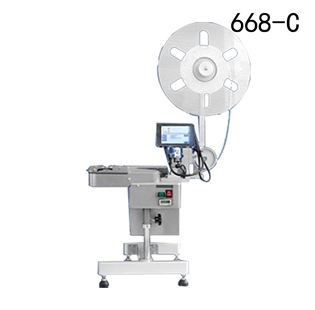
A twist tie machine combines several operations into one closing cycle: feeding the tie, positioning it, cutting it when required, placing it around the gathered bag opening, and twisting it to form the closure. This article explains those stages. The exact design and sequence can vary between machines.
What Happens Inside a Twist Tie Machine?
The overall flow inside a typical twist tie machine can be summarized as:
Tie Supply → Feeding → Tie Positioning → Cutting → Bag Placement → Twisting → Finished Closure
A simple way to visualize it:
[Tie Supply] → [Feeding] → [Tie Positioning] → [Cutting]
↓
[Finished Closure] ← [Twisting] ← [Bag Placement]
During this cycle:
- The twist tie enters the machine’s supply path.
- The machine controls the movement of the tie.
- The tie is advanced into the correct internal position.
- The tie is cut according to the operating setup.
- The tie is brought to the bag opening.
- The bag opening is gathered.
- The tie is twisted around the gathered area.
- A finished closure is formed.
Step 1 — Twist Tie Feeding
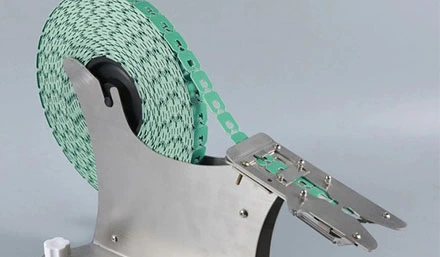
The feeding stage moves the tie from the supply into the machine. Common supply formats include continuous twist tie rolls and other machine-compatible tie formats.
The feeding mechanism moves the tie forward, and the machine controls how much tie is supplied. The feed needs to remain controlled so the following operations can be performed correctly. The exact feeding mechanism varies by machine design.
Step 2 — Tie Positioning
Feeding moves the tie forward. Positioning brings the tie to a defined internal point where it can be cut or transferred for the next step.
This stage is about the tie’s position inside the machine, not yet about the bag. If the tie is not advanced to the correct point, later steps may not align properly. The exact method depends on the machine design.
Step 3 — Cutting the Twist Tie
For machines using continuous roll-fed tie material, the process is:
Continuous roll → feed → cut to required length → ready for application.
The machine determines the required tie length according to its operating setup. The cutting mechanism separates one section from the continuous supply. Pre-cut ties do not require the machine to perform this cutting step.
Step 4 — Placing the Tie Around the Bag Opening
At this stage, the bag opening is gathered, and the prepared tie is positioned around the gathered area. The tie is held in place before twisting begins. The exact mechanism depends on the machine design.
Step 5 — Twisting the Tie
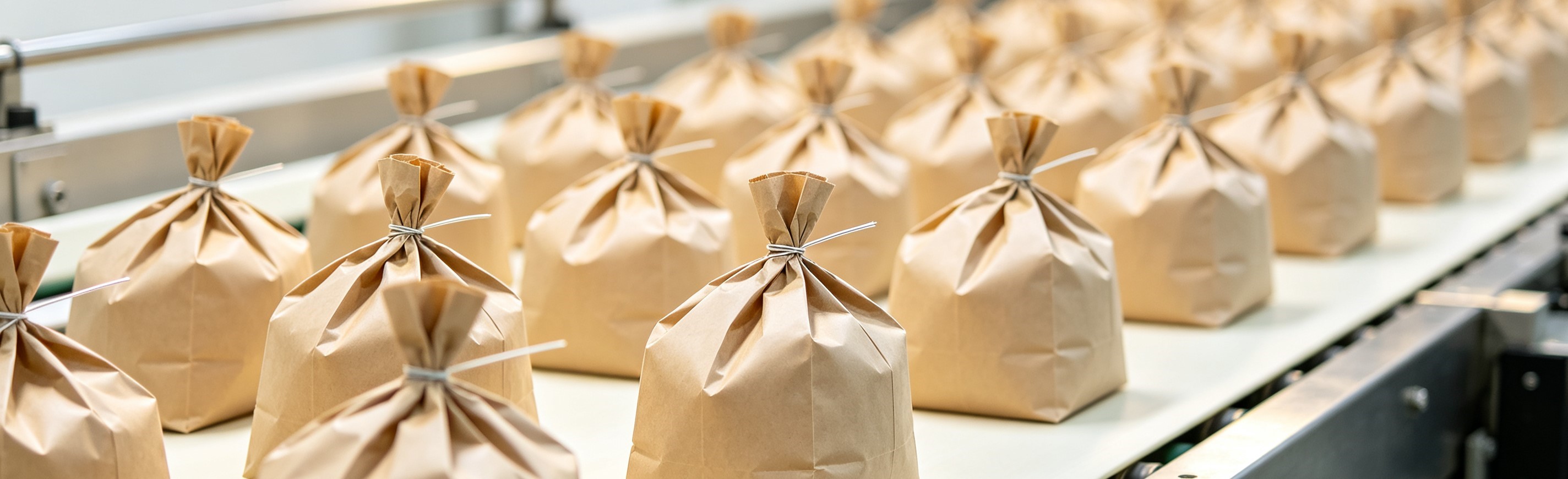
The tie is positioned around the gathered opening and twisted to form the closure. The finished tie remains around the bag opening.
This is the stage where the actual closure is formed. After twisting, the finished closure is released, and the machine is ready for the next bag.
What Can Affect the Closing Process?
Tie Format: The tie width, wire characteristics, length, and supply format need to match the machine.
Bag Format: Bag material, opening size, gathered opening, and bag thickness affect how the tie engages with the bag.
Machine Setup: Feeding, cutting, positioning, and twisting settings influence how the process runs.
When these elements are not properly matched, feeding, cutting, or twisting may become inconsistent.
Manual Closing vs. Machine-Assisted Closing
Manual Closing | Machine-Assisted Closing |
Operator supplies the tie | Machine controls tie supply |
Tie may be cut manually | Cutting can be integrated |
Operator positions and twists | Machine performs the closing sequence |
Suitable for lower-volume or flexible workflows | Designed for repetitive closing operations |
Machine-assisted closing is not automatically faster for every application. Its main role is to automate repetitive feeding, positioning, cutting, and twisting operations.
Key Takeaway
A twist tie machine typically combines several operations into one closing cycle: feeding the tie, positioning it, cutting it when required, placing it around the gathered bag opening, and twisting it to complete the closure.
The next article explores common twist tie application problems and troubleshooting considerations.