
Aug 14-2026
Why Global Brands Trust Twist-HD as an OEM Printed Twist Ties Manufacturer in China with ISO 9001
READ MORE >

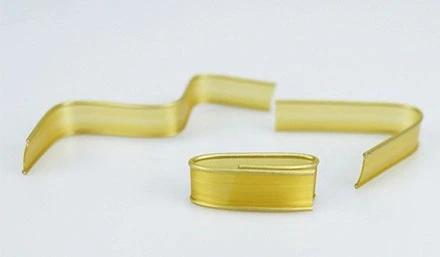
When you see a bag closed with a small, bendable closure, it is easy to assume that all such closures work the same way. Tin ties and twist ties are often grouped together because both are flexible closures that can be manipulated by hand. Both can also allow a bag to be opened and closed again.
However, they do not interact with the bag in the same way. A tin tie is typically attached to the bag and closes it by folding or rolling the bag opening and bending the tie ends. A twist tie is normally a separate closure wrapped around a gathered bag opening and twisted together. Understanding this structural difference makes it easier to compare how the two closures are applied, opened, and reused.
In common bag-closing applications, a tin tie is typically attached to the bag near the opening. It is usually not a separate piece that you hold in your hand before closing the bag. Instead, it is already associated with the bag’s closure structure.
To use a tin tie, the bag opening is commonly folded or rolled down first. Then the ends of the tie are bent to hold the folded section in place. The basic sequence is: fold or roll the bag opening, bend the tie ends, and the folded section stays in position.
A tin tie should not be assumed to provide an airtight or moisture-proof seal unless the specific product information confirms it.
A twist tie is generally a separate closure. In typical applications, it is not pre-attached to the bag. Instead, it is applied during the closing process.
To use a twist tie, the bag opening is gathered together first. The tie is then wrapped around the gathered section, and the two ends are crossed and twisted together. When opening the bag, the user untwists the tie to release the gathered opening. Depending on how it is used, the same twist tie can often be reapplied.
The basic sequence is: gather the bag opening, wrap the tie around it, and twist the ends together.

The most important difference between a tin tie and a twist tie is how each relates to the bag itself. A tin tie is usually attached to the bag and forms part of the bag’s closure system. A twist tie is usually applied as a separate closure and does not need to be pre-attached.
This distinction affects how the bag opening is prepared, how the closure is applied, whether the closure stays with the bag, how it is removed, and how it is reapplied.
With a tin tie, the user works with the bag opening and the attached closure together. Closing involves folding or rolling the opening and then bending the tie ends. With a twist tie, the bag opening is gathered first, the tie is positioned around the gathered section, and the ends are twisted together. The difference is not simply the shape of the closure. Each type requires a different closing motion.
| Comparison | Tin Tie | Twist Tie |
|---|---|---|
| Closure supplied with bag | Typically attached to the bag near the opening | Usually separate from the bag |
| Bag-opening shape | Opening is commonly folded or rolled | Opening is commonly gathered |
| Application sequence | Fold or roll opening, then bend tie ends | Gather opening, wrap tie, then twist ends |
| How it holds the opening | Holds the folded or rolled section in position | Wraps around and holds the gathered section |
| Opening | Unbend the ends and unfold or unroll the opening | Untwist the tie and loosen or remove it |
| Reclosing | Refold or roll, then rebend the ends | Gather again, reposition the tie, then retwist |
| Removability during opening | Normally remains associated with the bag | Can often be removed or set aside |
With a tin tie, opening generally involves straightening or releasing the bent ends and then unfolding or unrolling the bag opening. To reclose, the user folds or rolls the opening again and bends the ends back into position.
With a twist tie, opening involves untwisting the tie and then removing or loosening it from the gathered section. To reclose, the user gathers the opening again, repositions the tie, and twists it closed.
One objective difference is that a tin tie normally remains associated with the bag, while a removable twist tie can be separated from the bag during opening. This affects handling, but it does not automatically make one closure better than the other.

Step 1 — Look at the bag opening.
Will it be folded or rolled, or will it be gathered?
Step 2 — Consider closure placement.
Should the closure remain attached to the bag, or can it be separate?
Step 3 — Consider the closing motion.
Is the process based on bending or twisting?
Step 4 — Consider reopening.
Will the user unbend and refold, or untwist and retwist?
Step 5 — Match the closure structure to the required closing process.
Tin ties and twist ties can both provide a manually adjustable way to close a bag, but they operate differently. A tin tie is typically associated with the bag itself and works with a folded or rolled opening. A twist tie is generally applied separately around a gathered opening. The more useful comparison is therefore not which closure is universally better, but which closing method matches the way the bag needs to be handled.
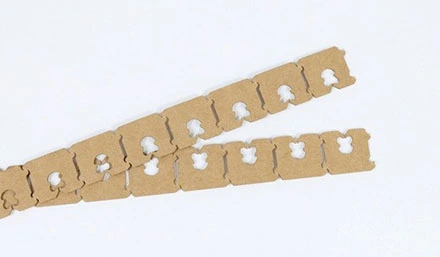
Twist ties can also be compared with bread clips, which secure a bag opening through a clip-based closing method rather than by wrapping and twisting a separate tie.