May 06-2025
Smart Traceability Label Ties: Reinventing the Dialogue Between Brands and Consumers with QR Codes
READ MORE >

The right twist tie format depends on how the tie moves through the closing process. A format that works well in one workflow may add unnecessary steps in another.
This article focuses on selection: given a specific bag-closing workflow, which twist tie format may be more suitable?
A twist tie closing workflow follows a sequence. In a manual operation, it often looks like this:
Tie Supply → Dispensing → Positioning → Closing → Finished Bag
In a machine-assisted operation, the sequence is more structured:
Roll Supply → Feeding → Cutting → Positioning → Twisting → Finished Closure
Different workflows place different demands on the tie format. Some processes need individual ready-to-use ties. Others need a continuous supply that can be fed, cut, and twisted as part of a repeated cycle.
Before choosing a format, identify which steps are already part of the workflow and which steps the tie format will introduce.
The first selection question is how the tie should be supplied.
Individual pieces
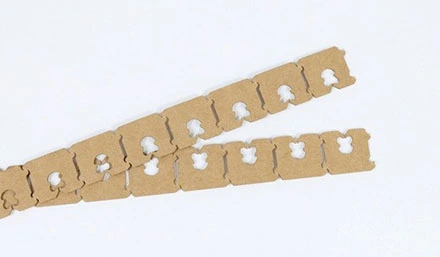
Pre-cut ties arrive ready to use. The operator picks up a tie and applies it. No roll dispensing or cutting step is required during application.
Continuous material
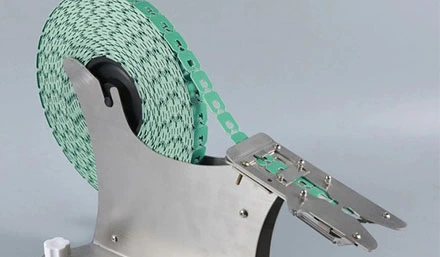
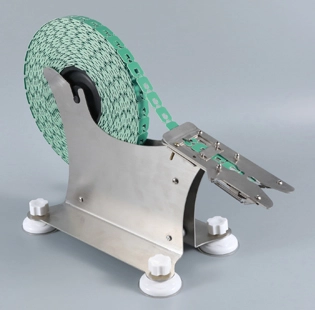
A twist tie roll provides a continuous supply. The workflow must include a way to dispense the tie material and a way to cut it to the required length.
This is not a question of which supply method is better overall. It is a question of which method fits the workflow.
A roll format does not automatically mean machine-assisted closing. Rolls can also be used in certain manual or semi-automatic workflows when a suitable dispensing method is available.
The key is whether the workflow can support continuous supply and cutting, or whether individual ready-to-use ties are more practical.
The application method often narrows the choice.
A manual workflow places tie handling with the operator. Pre-cut ties may be more suitable here because each tie is already separated.
The operator can pick up a tie, position it, and twist it closed without managing a roll or a cutting step.
When the same closing action is repeated many times, either format may work.
Pre-cut ties can simplify handling, while a roll format may reduce the need to prepare or replenish individual ties. The suitable choice depends on the workflow volume, how ties are stored, and whether cutting can be integrated smoothly.
A workflow that depends on continuous tie supply usually points toward a roll format.
The roll feeds tie material into the process, and cutting is typically part of the application cycle. This can support ongoing closing tasks, but it depends on consistent dispensing and cutting.
Machine-assisted closing shifts feeding, cutting, positioning, and twisting to equipment.
In this case, the tie format must be compatible with the equipment's feeding, cutting, and twisting system. A continuous roll or a format designed for the specific machine may be required.
Equipment compatibility should be checked before changing the tie format.
Bag presentation affects how much preparation is needed before the tie is applied.
Small openings may require less gathering and positioning. A simple manual closing workflow can be practical, especially when the tie can be positioned quickly.
Larger or fuller openings may require more gathering before the tie is applied.
A longer tie or a more controlled closing process may be needed. This can affect how the operator handles the bag and how consistently the closure is formed.
When many bags share similar opening characteristics, a standardized closing workflow is easier to establish.
Consistent bag presentation supports consistent tie positioning, whether the process is manual or machine-assisted.
The key point is that bag opening and fullness determine how much positioning and gathering is required before the tie is applied. They also influence the tie length needed to gather and close the bag opening.
A continuous roll format may fit the workflow when:
Tie material needs to be supplied continuously
Cutting can be integrated into the closing process
Bag closing is repetitive
Compatible dispensing or tying equipment is available
Standardized tie feeding is useful
These conditions suggest that the workflow can support a continuous supply.
A roll format can reduce the need to handle individual ties, but it also introduces additional workflow requirements. Dispensing must work reliably, cutting must produce consistent results, and the tie material must be compatible with any equipment involved.
Pre-cut ties may simplify the workflow when:
Individual ties are convenient to handle
Continuous dispensing is not needed
The same predetermined tie length is used
Manual application is preferred
Cutting during the workflow is unnecessary
In these situations, the absence of dispensing and cutting steps can make the process more direct.
The operator picks up a tie and applies it without managing a roll or operating cutting equipment.
For lower-volume tasks, intermittent closing, or workflows where manual handling is preferred, pre-cut ties can be a practical choice.
Use the following questions to narrow down the suitable format.
| Question | If Yes | What to Consider |
|---|---|---|
| Do you need individual ready-to-use ties? | Yes | Pre-cut format |
| Do you need continuous tie supply? | Yes | Roll format |
| Is cutting part of the process? | Yes | Continuous roll with compatible cutting |
| Is the process mainly manual? | Yes | Pre-cut may simplify handling |
| Is the process repetitive? | Yes | Standardized format and workflow |
| Is equipment involved? | Yes | Check tie and equipment compatibility |
| Is bag presentation consistent? | Yes | A standardized closing workflow may be easier to establish |
Who or what handles the tie?
Operator → Individual pieces may be easier to handle
Equipment → Check the required tie supply and machine compatibility
How is the tie supplied?
Individual pieces → Pre-cut twist ties
Continuous material → Twist tie roll
Is cutting required during application?
No → Pre-cut may be more practical
Yes → Continuous roll with compatible cutting
Is equipment involved?
No → Manual workflow
Yes → Confirm compatibility with the feeding, cutting, and twisting system
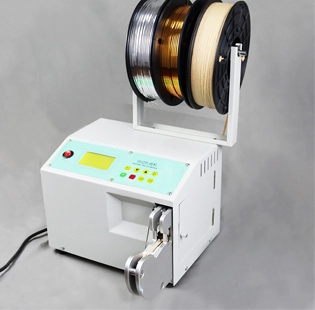
If your closing workflow involves equipment, you can also review our twist tying machine collection to compare available machine options.
This decision path does not cover every scenario, but it reflects the main workflow considerations when selecting a twist tie format.
Before changing a tie format, confirm where the current issue originates. Not every problem requires a different tie.
Check the following:
Tie format — Is the current format compatible with the dispensing and application method?
Tie length — Does the tie length match the bag opening and closing requirements?
Bag opening — Has the bag type or opening size changed?
Dispensing method — Is the tie being dispensed consistently and without obstruction?
Application method — Is the tie being positioned and twisted correctly?
Equipment compatibility — If equipment is involved, is the tie compatible with the feeding, cutting, and twisting mechanisms?
These checks are about change-format decisions rather than general troubleshooting.
If the workflow is already experiencing application problems, it is better to identify the source of the problem before changing the tie format. In some cases, adjusting the workflow or equipment setup may resolve the issue without changing the tie itself.
Choose the twist tie format according to the actual closing workflow, not the tie alone.
For manual or intermittent closing, pre-cut ties may simplify handling because each tie is ready to use. For continuous, repetitive, or equipment-assisted closing, a roll format may fit better because it supports ongoing supply and integrated cutting.
The suitable choice depends on how the tie is supplied, dispensed, positioned, and applied, as well as whether equipment compatibility is required.
By matching the tie format to the closing workflow, you can reduce unnecessary handling steps and establish a more consistent bag-closing process.