Sep 11-2026
How to Apply Twist Ties Manually: A Step-by-Step Closing Process
READ MORE >

How do you close a bag when the package needs to be opened and resealed multiple times? Tape can lose its stickiness, clips can be bulky, and heat seals are permanent. For countless bakeries, confectioneries, snack producers, and coffee roasters, the answer is a simple, reliable, and paper‑based solution: the paper twist tie.
A paper twist tie combines a flexible paper outer layer with an internal wire that holds its shape after bending. It keeps bags closed, allows easy access, and can be reused by the end consumer. These ties come in different constructions, widths, lengths, and formats—pre‑cut pieces or continuous rolls—to suit everything from artisanal pastry bags to high‑volume packaging lines.
This guide explains the main types of paper twist ties, the available sizes and specifications, where they are commonly used, and what to consider when choosing the right tie for your packaging.
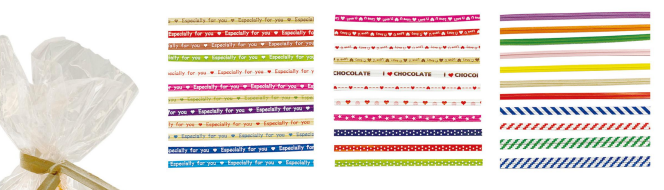
A paper twist tie is a closure device made of a thin metal wire covered by a paper strip. The paper is twisted around the wire during manufacturing, creating a smooth, printable, and easy‑to‑handle exterior.
The paper layer serves several purposes:
It provides a comfortable, non‑abrasive surface for manual handling.
It separates the internal wire from the outside of the bag.
It can be produced in various colours or left natural to complement brand packaging.
It can be twisted and untwisted for repeated opening and closing when used appropriately.
The wire allows the tie to retain its bent shape after twisting, keeping the bag closed. For example, some single‑wire paper twist ties are available with a 0.45 mm wire diameter, balancing flexibility and holding performance for common bag‑closing applications.
Not all paper twist ties are the same. The most common distinction is between single‑wire and double‑wire constructions.
This is the standard and most widely used type. It contains one continuous wire inside the paper covering. Single‑wire ties are flexible, lightweight, and suitable for the majority of bag packaging applications.
Available specifications include:
Widths: 4 mm, 4.8 mm, 6.4 mm (other widths available on request)
Wire diameter: 0.45 mm
Pre‑cut lengths: 8 cm, 9 cm, 10 cm, 12 cm (and others)
Spool format: 4 mm × 0.45 mm, supplied in 610 m or 900 m per roll
Packing: 100, 500, 700, or 1,000 pieces per bag for pre‑cuts; 5 rolls per carton for spools
Single‑wire ties are offered in two primary formats: pre‑cut pieces for manual use, and continuous spools for cutting on‑demand.
For larger bags or applications where extra holding support is desired, double‑wire ties are available. These contain two parallel wires inside a wider paper covering.
Available specifications include:
Wire diameter: 0.50 mm per wire
Widths: 8 mm, 9.5 mm, 12.8 mm
Pre‑cut lengths: 4 cm, 13 cm, 16 cm (with other lengths possible)
Double‑wire ties are generally supplied as pre‑cut pieces and are used when a wider closure surface and additional holding support are beneficial.
Choosing the right size starts with understanding the available dimensions. The following table summarizes selected available specifications for single‑wire paper twist ties:
| Specification | Available Information |
|---|---|
| Width | 4 mm, 4.8 mm, 6.4 mm (custom widths possible) |
| Wire diameter | 0.45 mm |
| Pre‑cut lengths | 8 cm, 9 cm, 10 cm, 12 cm (custom lengths possible) |
| Spool length | 610 m or 900 m per roll |
| Packing (pre‑cut) | 100, 500, 700, or 1,000 pcs per bag |
| Packing (spool) | 5 rolls per carton |
Note: Always confirm the required dimensions before ordering, as custom sizes are often available.
One of the most critical decisions is whether to use pre‑cut ties or a continuous spool. Each format serves different operational needs.
Pre‑cut ties are individual pieces of a fixed length, ready to use straight from the bag.
Advantages:
Consistent length every time—no measuring or cutting required.
Ideal for manual bag closing in small to medium volumes.
Easy to distribute to staff or include in retail packaging kits.
Available in multiple packing quantities to match usage rates.
Best suited for: Bakeries, small confectionery shops, farmers' markets, and any operation where ties are applied by hand at a steady pace.
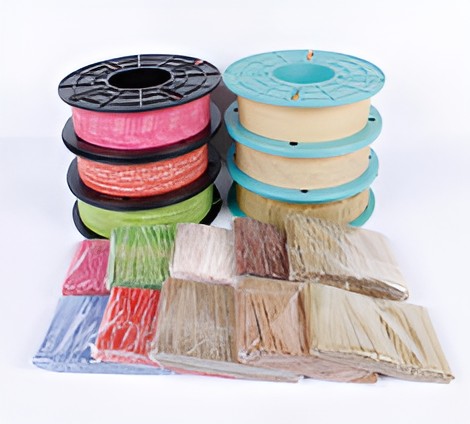
A spool format supplies the tie material as a continuous roll, typically with a 4 mm width and 0.45 mm wire, offered on 610 m or 900 m rolls.
Advantages:
You can cut the tie to the length required for each bag, which can help reduce unnecessary excess material and size mismatch.
One roll can serve multiple bag sizes, offering great flexibility.
Efficient for high‑volume applications because one continuous roll can be cut into different lengths as required.
Spool formats can be suitable for applications where ties are cut to length during packaging. Machine compatibility should be confirmed based on the equipment and tie specifications.
Best suited for: High‑volume packaging lines, operations with varying bag sizes, and users who prefer to control tie length per package.
There is no single "perfect" size for every bag. The choice depends on the bag itself, the product inside, and how the tie will be applied. For a broader overview of how material, wire gauge, length, packaging environment, and supply format affect twist tie selection, see our guide to choosing the right twist tie for different packaging applications. Then use the paper-specific factors below to narrow down the appropriate paper twist tie.
The width of the bag opening determines how much material must be gathered and twisted. A wider opening requires a longer tie to wrap around the gathered neck. Conversely, small pastry bags need shorter ties.
For small bags (e.g., single cookies, candy pouches), a pre‑cut length of 8–9 cm may be a good starting point.
For medium bags (bread loaves, coffee portions), 10–12 cm is common.
For larger bulk bags, longer pre‑cuts or a spool format gives you the freedom to cut to the exact length.
Remember: a tie that is too short will not close securely; one that is too long looks messy and wastes material.
Manual application: Pre‑cut ties are convenient and reduce handling time.
Repeated retail opening: If consumers will open and re‑close the bag many times, a durable single‑wire tie with a moderate width (4–4.8 mm) offers a good balance.
High‑volume packaging: Spools can be integrated with cutting machines to automate the process (confirm compatibility with your equipment).
Width affects both appearance and function. The available widths—4 mm, 4.8 mm, 6.4 mm—each have their place. As a general starting point, narrower ties may suit smaller bag openings, while wider ties can provide a broader closure surface for larger gathers. The final choice should be confirmed based on the actual bag dimensions and application.
Width is not about "bigger is better." Choose based on the package size and the visual impression you want to create.
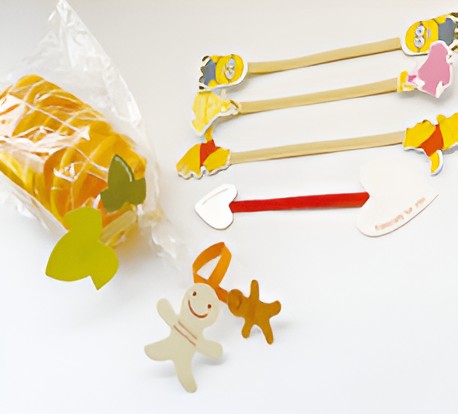
Paper twist ties are remarkably versatile and appear across many food and non‑food industries. Below are the most common applications.
Bread bags, pastry bags, croissant sleeves, and cake boxes often rely on twist ties for a simple, rustic closure. A 4.8 mm or 6.4 mm single‑wire tie may suit bakery bags where a broader closure surface and a natural appearance are preferred.
Candy bags, chocolate pouches, and sweet mix packages may benefit from smaller widths (4 mm) and shorter lengths (8–9 cm), where a more discreet closure is desired. The paper covering can be printed or coloured to match seasonal themes or brand colours.
Dried apricots, nut mixes, trail mix, and savoury snacks are commonly packed in resealable bags. Twist ties provide a simple closure option for resealable snack and dried‑fruit bags. Both single‑wire and double‑wire options can be used, depending on bag weight.
Coffee roasters and tea merchants often use paper twist ties to close kraft bags or foil‑lined pouches. The choice between paper and other covering materials should depend on the packaging environment, including moisture and oil exposure.Other coffee bag closure formats, such as coffee tin ties, can also be considered depending on the bag construction and closure requirements.
Beyond the food categories above, twist ties are also used for closing various lightweight bags—such as those for candles, ornaments, and other retail items—where a neat, reusable closure is needed without adding significant weight or bulk.
Since both single‑wire and double‑wire paper twist ties are available, it helps to compare them directly.
| Feature | Single‑Wire Paper Twist Tie | Paper Double Wires Twist Tie |
|---|---|---|
| Wire construction | One wire | Two parallel wires |
| Typical wire diameter | 0.45 mm | 0.50 mm per wire |
| Typical widths | 4 / 4.8 / 6.4 mm | 8 / 9.5 / 12.8 mm |
| Common formats | Pre‑cut and spool | Pre‑cut primarily |
| Holding support | Adequate for most lightweight bags | Two‑wire construction can provide additional holding support compared with a single‑wire construction |
| Typical applications | Bakery, confectionery, snacks, tea | Larger bags, products requiring extra closure support |
Which one should you choose? There is no universal "better" option. The appropriate construction depends on:
The weight and size of the bagged product.
How much material must be gathered at the neck.
The closure support required during transport and retail handling.
Your application speed and equipment.
For standard bakery and snack bags, single‑wire is the workhorse. For larger or heavier packages, double‑wire may be worth considering.
What is a paper twist tie used for?
It is used to close and reseal bags—especially in food packaging like bread, candy, snacks, coffee, and dried fruits. It also appears in craft and gift packaging.
What sizes are available for paper twist ties?
Available pre‑cut lengths vary by product and can include options from 4 cm to 16 cm, with other lengths available depending on the product specification. Widths typically range from 4 mm to 6.4 mm for single‑wire, and 8 mm to 12.8 mm for double‑wire.
What is the difference between pre‑cut and spool paper twist ties?
Pre‑cut ties are ready‑to‑use individual pieces of a fixed length. Spool ties come as a continuous roll, allowing you to cut each tie to the exact length you need, which reduces waste and offers flexibility.
What size paper twist tie should I use?
Start with the bag opening size. For small pastry or candy bags, try 4 mm wide × 8–9 cm long. For bread and medium snack bags, 4.8–6.4 mm wide × 10–12 cm long is typical. For larger bulk bags, consider double‑wire or a spool to cut longer pieces. These are general starting points—always test with your actual bag.
What is the difference between single‑wire and double‑wire paper twist ties?
Single‑wire has one internal wire and is lighter, narrower, and more flexible. Double‑wire has two parallel wires, is wider, and can offer additional holding support—often considered for larger or heavier bags.
Can paper twist ties be supplied on rolls?
Yes. Spool formats (e.g., 610 m or 900 m per roll) are available, typically with 5 rolls per carton. Spools provide continuous material that can be cut to the required tie length. This format can be practical for high‑volume users who need continuous material and variable tie lengths.
The right paper twist tie is not chosen in isolation—it starts with the package itself. Begin by examining your bag's opening, the product weight, and how the bag will be handled by your customers. Then match those requirements to tie length, width, wire construction, and format.
A logical sequence to follow:
Bag opening → determine the approximate length needed.
Tie length → select pre‑cut or plan to use a spool.
Tie width → choose a width that balances appearance and function.
Wire construction → single for general use, double for heavier loads or extra support.
Format → pre‑cut for manual simplicity, spool for flexibility and high‑volume use.
Application method → confirm manual or machine compatibility.
By working through these steps, you will arrive at a specification that performs reliably, looks professional, and keeps your packaging process efficient.
For specific dimensions and available configurations, refer to the relevant product specifications. A well‑chosen paper twist tie is a small component that makes a big difference in daily packaging operations.