
Feb 09-2026
Improving Agricultural Efficiency: How to Choose Weather-Resistant Garden Ties for Commercial Vineyards?
READ MORE >

Most weeks, the inquiries are fairly scattered. Someone asks only about twist ties, someone else only about bread clips, and someone sends a photo of a coffee bag and asks, “What do you usually put on this?” That is not a question with a one-line answer, because the bag is different, the user is different, and the answer changes with them. But after enough of these conversations, some patterns do show up.
What follows is roughly the order we go through when confirming details with a customer. It is not a product encyclopedia. It is closer to the questions we actually ask before recommending a reclosable bag closure.
Coffee, snacks, baking ingredients, and similar products are often not used up in one go. Some people open the bag once a day; some open it several times a day. The first seal obviously has to hold, but for this kind of packaging, the more important question is whether the bag is easy to open and close again each time.
We have had customers say, “The bag is filled pretty full, and once the opening is gathered it gets quite thick.” We have also had customers say, “The opening is too thin, and the clip keeps slipping.” You cannot see that from a bag size alone. You have to look at the condition of the opening after the product is inside. So we usually start by asking: after this bag is filled, what does the opening look like? Can it be folded, or does it only gather? Roughly how thick is it after gathering? Once those points are clear, recommending a closure has some basis.
Opening width and material thickness matter, of course, but so does whether there is a folded edge and whether the opening is better suited to repeated folding or to gathering. A wide, flat opening and a narrow opening with a folded edge will not take the same closure. We usually suggest customers look at the actual bag opening first, rather than asking about closures based only on a bag size. The closure comes into direct contact with the opening, not with the bag as a whole. Sometimes a customer sends a photo, and after looking at it we will say, “This opening should fasten once it is gathered,” or “This opening is on the thin side, so the clip may not sit very steadily.” That judgment comes from the condition of the opening, not from a product name.
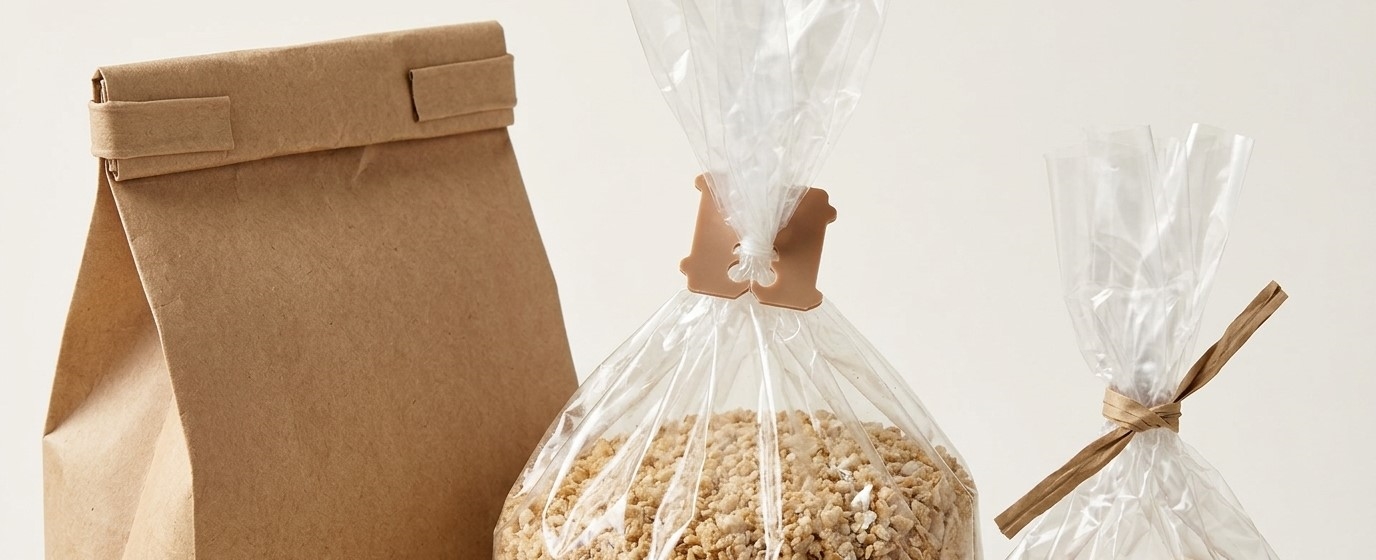
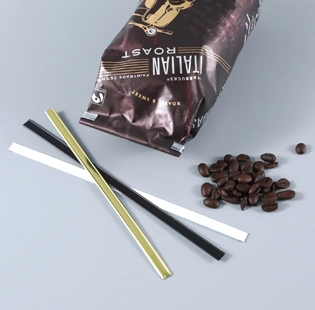
A Tin Tie is fixed on the inside of the opening and closes the bag by repeated folding. Coffee bags use this structure quite often, and it is straightforward—fold the opening over and press it down. Our Tin Tie page also notes that paper Tin Ties can be customized, which is useful for brands that want the closure to carry a logo or a simple design.
But how well a Tin Tie works over repeated use depends on the bag material, the folded edge design, and the user’s folding habit. Some bags fold neatly after a few uses; others start to crease. That depends on the actual bag. One practical point from the product page is also worth mentioning early: Tin Ties are generally used in small amounts and can help a bag be resealed and reused, but they are not typically recyclable through standard municipal recycling because of the mixed metal and adhesive parts. They usually need to be removed from the paper or plastic bag before the bag itself is recycled. If a customer is asking about environmental claims, that is a conversation worth having with the actual material in hand, not just from the word “reusable.”
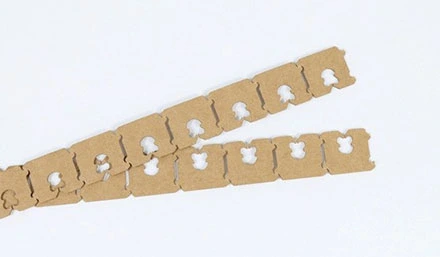
A Bread Clip—what we also call a plastic food bag closure—is not a spring clamp. It works with bags that have a gathered or twisted opening. The gathered neck is fitted into the clip’s slot, so the bag stays closed without wrapping a separate tie around it. To reopen the bag, the user removes the clip, takes out what they need, and refits it when done. How steadily it holds depends on the thickness of the gathered neck and the design of the clip’s opening, so it is worth trying it on a filled bag before settling on it.
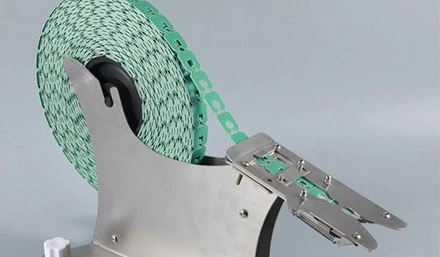
Our Bread Clip page describes these clips as suitable for film, mesh, and certain paper bags, and they can be applied manually or with automatic or semiautomatic equipment. The page also frames the clip as a reclosable solution that helps protect the aroma, texture, and flavor of baked goods and prevents spillage during storage. In batch packing, clipping is faster than hand-twisting twist ties, and neatness is easier to control, but the clip remains visible, so the look is more practical than decorative.
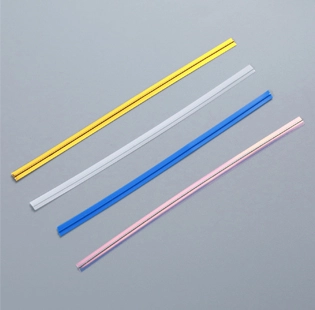
A Twist Tie is the most flexible of the three. The opening is gathered and wrapped with the twist tie to hold it in place, which is fairly intuitive. For small food bags and similar packaging where the opening gathers easily, this is convenient in daily use.
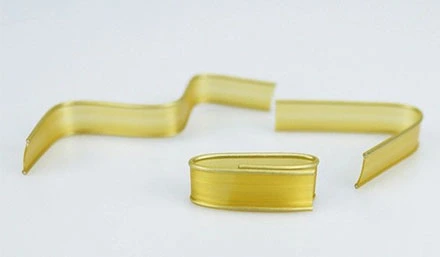
Our Twist Ties page is useful here because it separates applications and materials rather than treating all twist ties as the same. For food packaging, the page points toward food-safe twist ties, typically paper or plastic-coated. Paper twist ties are described as eco-friendly and suitable for food packaging, but not for moist environments; plastic twist ties have better water resistance; metal Tin Ties provide extra strength for heavier-duty bundling. The page also mentions reusability as something to check rather than assume, which matches what we see in practice: some Twist Ties are more for one-time tying, while others are better suited to repeated adjustment. It depends on the product structure, so it is better not to make a general statement.
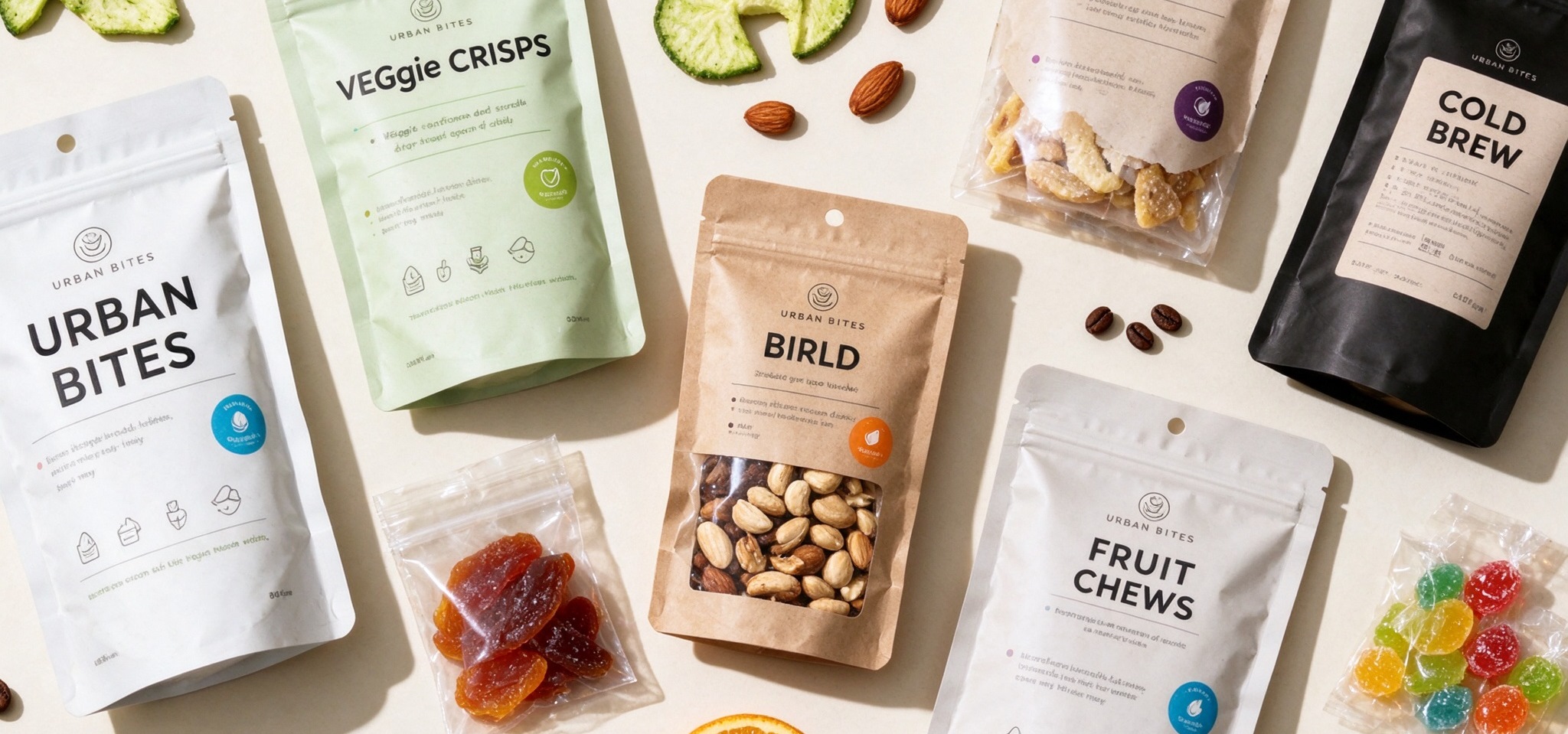
Coffee bags often lean toward Tin Ties, because the opening is designed to fold over and the bag is opened daily. Snack bags are more mixed: if the opening gathers neatly and the bag is opened often, a Bread Clip can be convenient; if the bag is smaller and the opening gathers easily, a Twist Tie also works. Baking ingredient bags depend on the opening size and what is inside. If the gathered neck is not too thick, a Bread Clip can be tried; if the opening needs more flexible closing, a Twist Tie may be useful. Small food bags often go with Twist Ties, simply because the opening gathers easily and the bag does not need a large closure.
These are general directions, not hard matches. Even among snack bags, a wider opening or a fuller fill can change whether a Bread Clip or a Twist Tie is the better fit. In the end, the bag type and the user’s habit still matter.
From our side, when taking orders and making samples, a few things are worth confirming before settling on a closure. It usually saves trouble later.
It is best to send an actual bag sample, or at least describe the opening after the bag is filled: how wide it is, how thick, whether there is a folded edge, and roughly how thick it gets after gathering. Also mention how often the user expects to open the bag, because high-frequency and low-frequency use have different priorities. Check whether the closure is easy to install, remove, and reuse—not just whether it closes well the first time. And finally, try it with the bag actually filled, not only with an empty bag. An empty bag and a filled bag behave very differently at the opening, and a filled-bag test shows problems closer to daily use.
One more reminder: an ordinary closure does not mean airtight, moisture-proof, or freshness-preserving. If the customer is concerned about moisture protection or freshness, that is a different packaging requirement. Using a Tin Tie, a Bread Clip, or a Twist Tie does not make the bag an airtight pack. Aligning on this early helps avoid misunderstandings later.
Choosing a closure for a bag that needs to be reopened is not just about the product name, and not just about whether the first seal holds. The opening structure, how often the user opens the bag, whether reclosing is smooth, and what form the product inside takes are all worth looking at together. Tin Ties, Bread Clips, and Twist Ties each have situations they suit; no single one covers every bag.
Before placing an order, the safer approach is to try the actual bag with the product inside, check how it feels to operate, how well it closes, and how efficient it is in batch packing, and then settle on the solution. An empty-bag test only gives a rough idea; the condition of the opening after filling is closer to daily use.
If you are unsure which closure suits your bag, you can send us the bag sample or a few photos of the filled opening through our contact page. We will look at the actual condition and reply with what we would try first.